

Trying to place a television in a tight space often feels like a losing battle. You want a comfortable spot to binge your favorite shows, yet that big black rectangle seems to swallow the entire room. When a bulky media stand blocks a walkway or forces your sofa into an awkward angle, the whole space starts feeling cramped fast.
The good news is you do not have to sacrifice comfort or screen size just because you lack square footage. With the right small living room layout ideas with a TV, you can keep walkways open, bounce natural light around the room, and make your floor plan feel twice its actual size.
Here are 15 practical, designer-tested ways to arrange your furniture and screen without crowding your home.
Why Traditional TV Setups Fail in Compact Rooms
Most people default to pushing a massive sofa against one wall and shoving a heavy entertainment center directly across from it. In a large family room, this works fine. In a compact apartment or narrow townhouse, it creates a bowling alley effect.
Heavy furniture blocks sightlines. When your eyes hit a bulky cabinet or the back of a tall armchair the moment you walk through the door, your brain registers the room as tiny. The secret to opening things up is choosing low-profile pieces, lifting furniture off the floor, and treating the television as part of the wall rather than a standalone monument.
Best Small Living Room Layout Ideas with a TV for Narrow Spaces
Narrow rooms are tricky because every inch of depth counts. If your sofa and coffee table eat up the center of the floor, you end up squeezing sideways just to reach the kitchen.
1. The Floating Console and Wall-Mount Combo
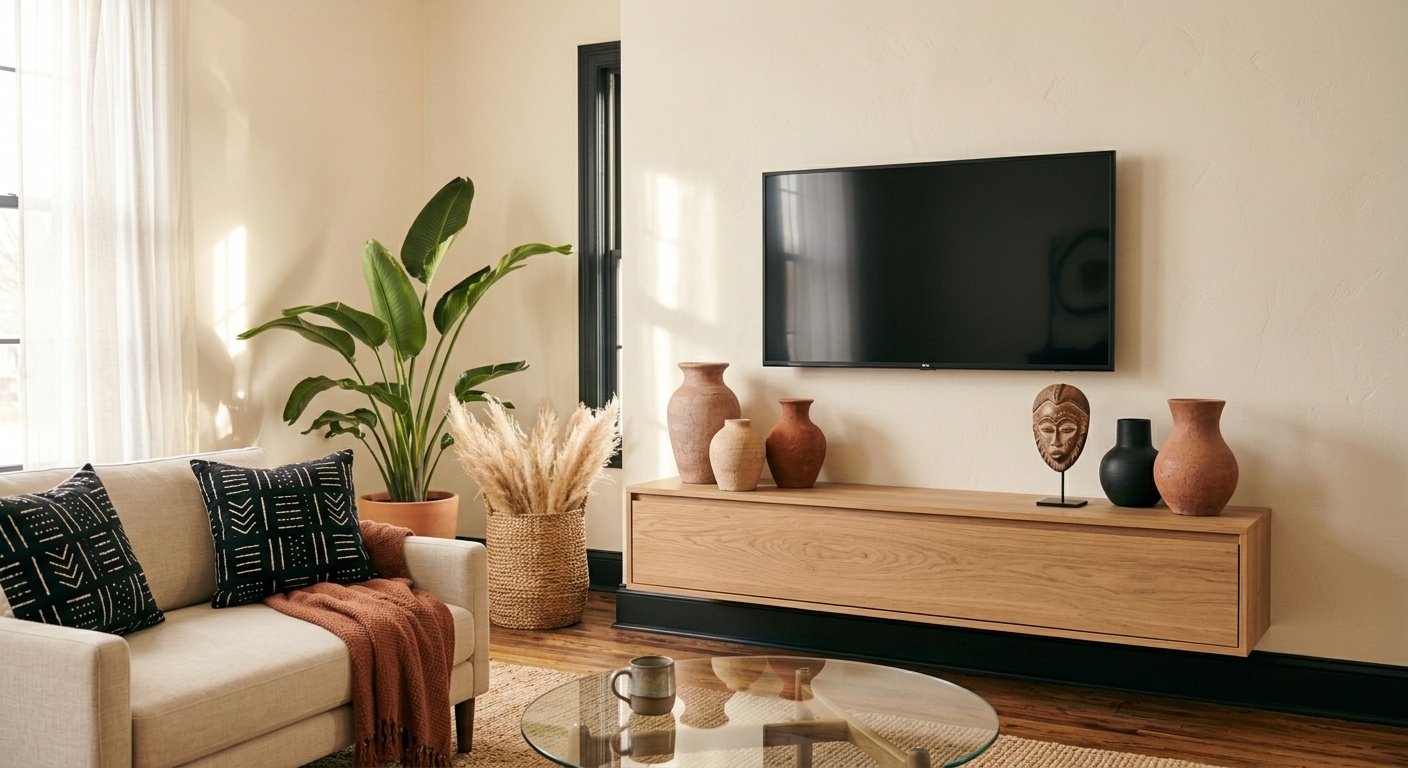
Skip the floor-standing media cabinet completely. Mount your TV directly onto the drywall and install a slim floating shelf underneath it for your streaming box or remotes. Seeing bare floor continue all the way to the baseboard tricks the eye into thinking the room is deeper than it really is.
2. The L-Shaped Sectional Against the Corner
A compact L-shaped sectional actually saves space compared to a standard sofa and separate accent chair. Tuck the long side against your longest wall and let the chaise end hug the corner. Mount the TV on the opposite wall. You get maximum seating without extra chair legs cluttering the floor.
3. The Gallery Wall Disguise
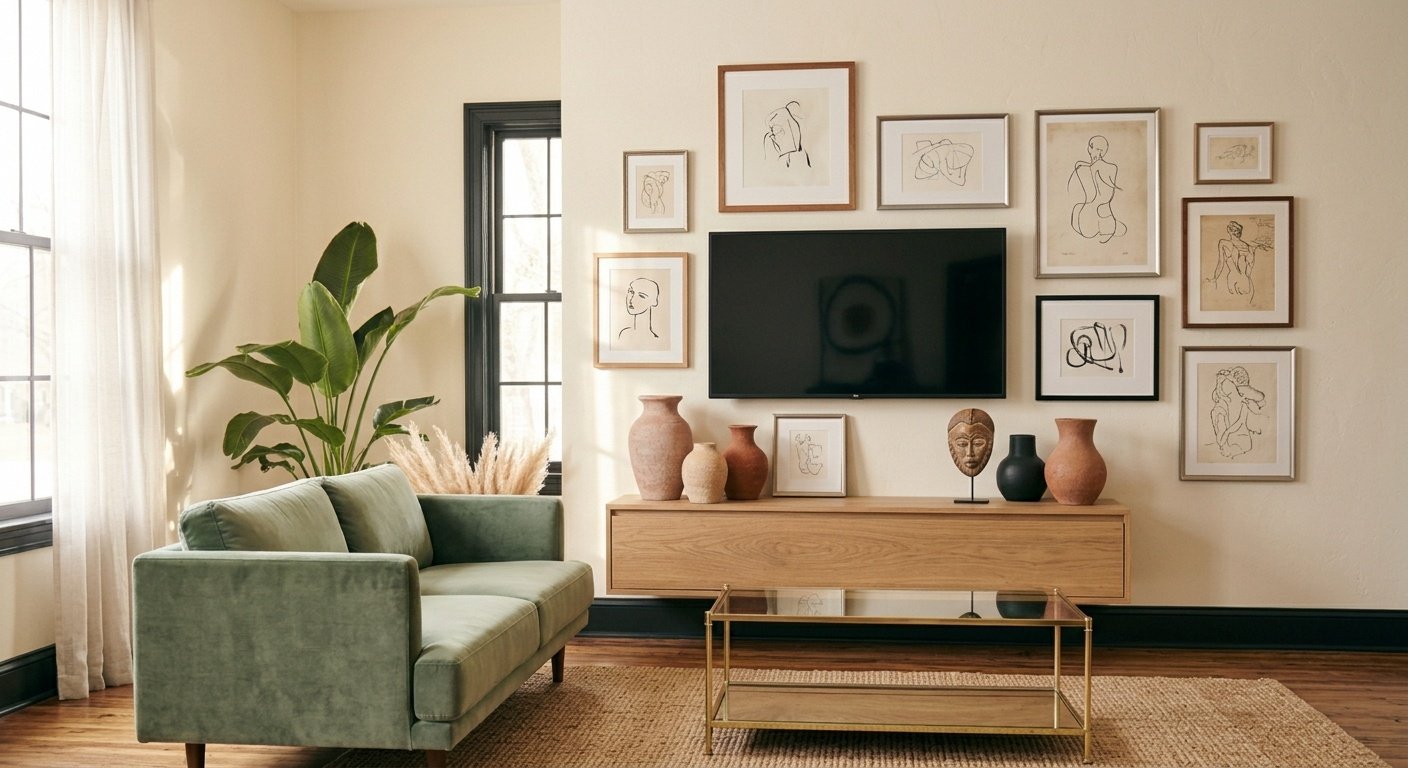
A blank black screen draws way too much attention when it is turned off. Surround your wall-mounted TV with framed art prints, small mirrors, and botanical sketches in matching frames. The screen blends right into the grid, turning an eyesore into an intentional focal point.
4. The Window-Adjacent Placement
People often avoid putting a TV anywhere near a window, yet placing it on the perpendicular wall right next to a window works wonders. You avoid direct screen glare while keeping the window completely unobstructed so daylight floods the seating area.
5. The Back-to-Back Open Concept Divider
If your living area shares space with a dining table or kitchen, float your sofa in the middle of the room facing the wall-mounted TV. Use a slim console table directly behind the sofa back to hold lamps or baskets. This creates a cozy TV zone without building any walls.
Smart Corner and Angled Arrangements
Sometimes a room has too many doorways, radiators, or windows to leave a full wall open. When flat wall space is scarce, working with the angles is your best move.
6. The Articulating Corner Mount
Corners are wasted dead zones in most small rooms. Install a heavy-duty full-motion swivel mount in the corner between two windows. You can angle the screen toward your sofa during movie night and tuck it flat against the wall when guests come over.
7. The Angled Loveseat and Swivel Chair Duo
Instead of forcing a three-seat sofa into a boxy room, pair a cozy two-seat loveseat with a compact swivel armchair. Angle the loveseat toward a corner TV stand and use the swivel chair to face either the screen or your guests during conversation.
8. The Fireplace Mantel Alternative
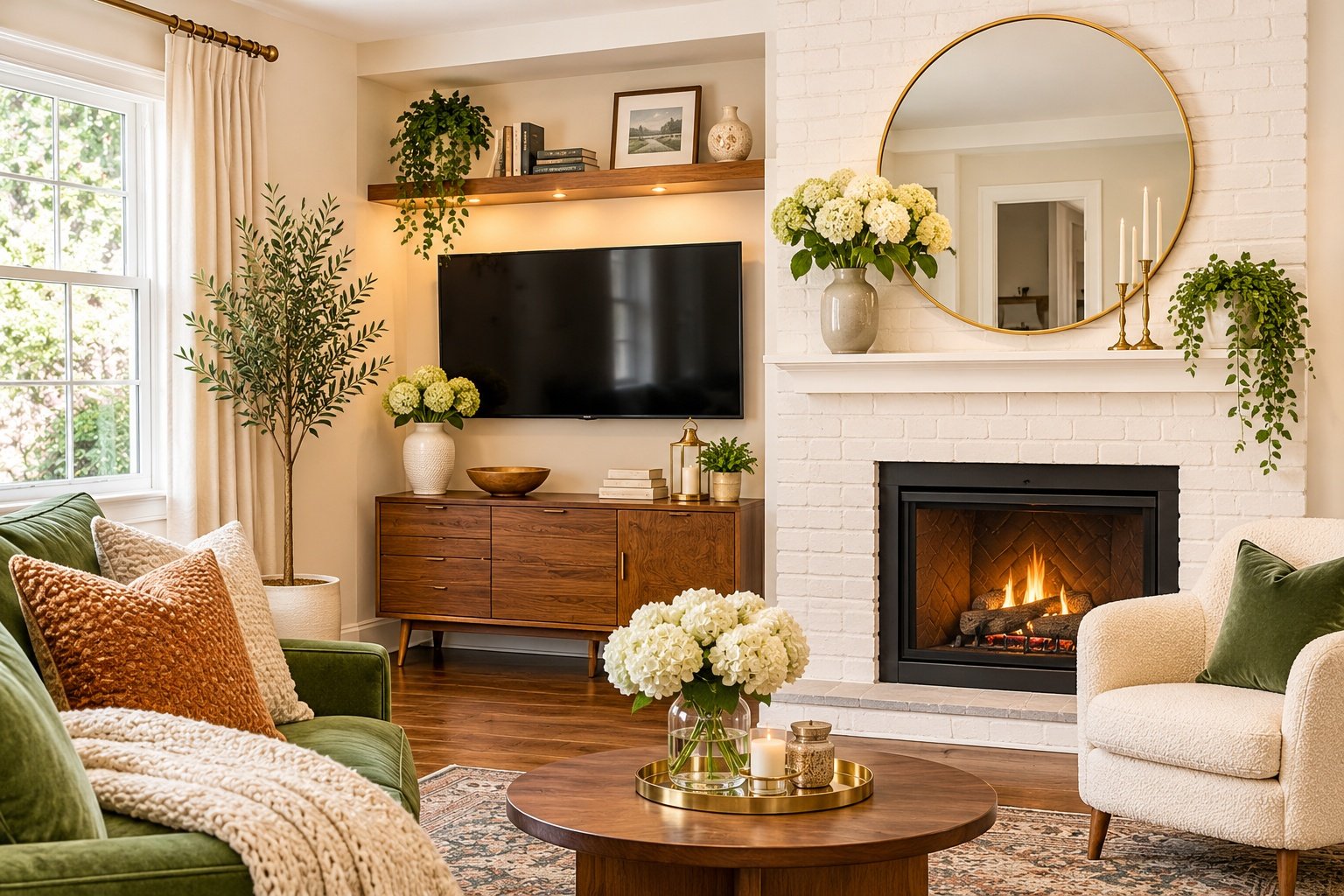
Mounting a TV above a fireplace often strains your neck and looks top-heavy in a small room. Instead, place a low media bench in the alcove next to the fireplace. Put a large mirror or piece of art over the mantel so the room feels balanced and airy.
9. The Diagonal Room Flip
If your living room feels like a tight square box, try angling your main sofa diagonally across one corner facing the opposite corner where the TV sits. Angling furniture breaks up rigid parallel lines and creates open triangular pockets behind the sofa for a tall floor lamp or indoor plant.
10. The Tripod Easel Stand
Trade traditional wooden TV cabinets for a sleek tripod easel TV stand. It looks like a studio art piece, takes up almost zero visual weight, and lets you wheel or shift the screen to whatever angle feels best that evening.
Multi-Functional and Hidden TV Setups
When you live in a studio apartment or a multipurpose family space, you do not always want your living room screaming “home theater” 24 hours a day.
11. The Built-In Bookshelf Niche
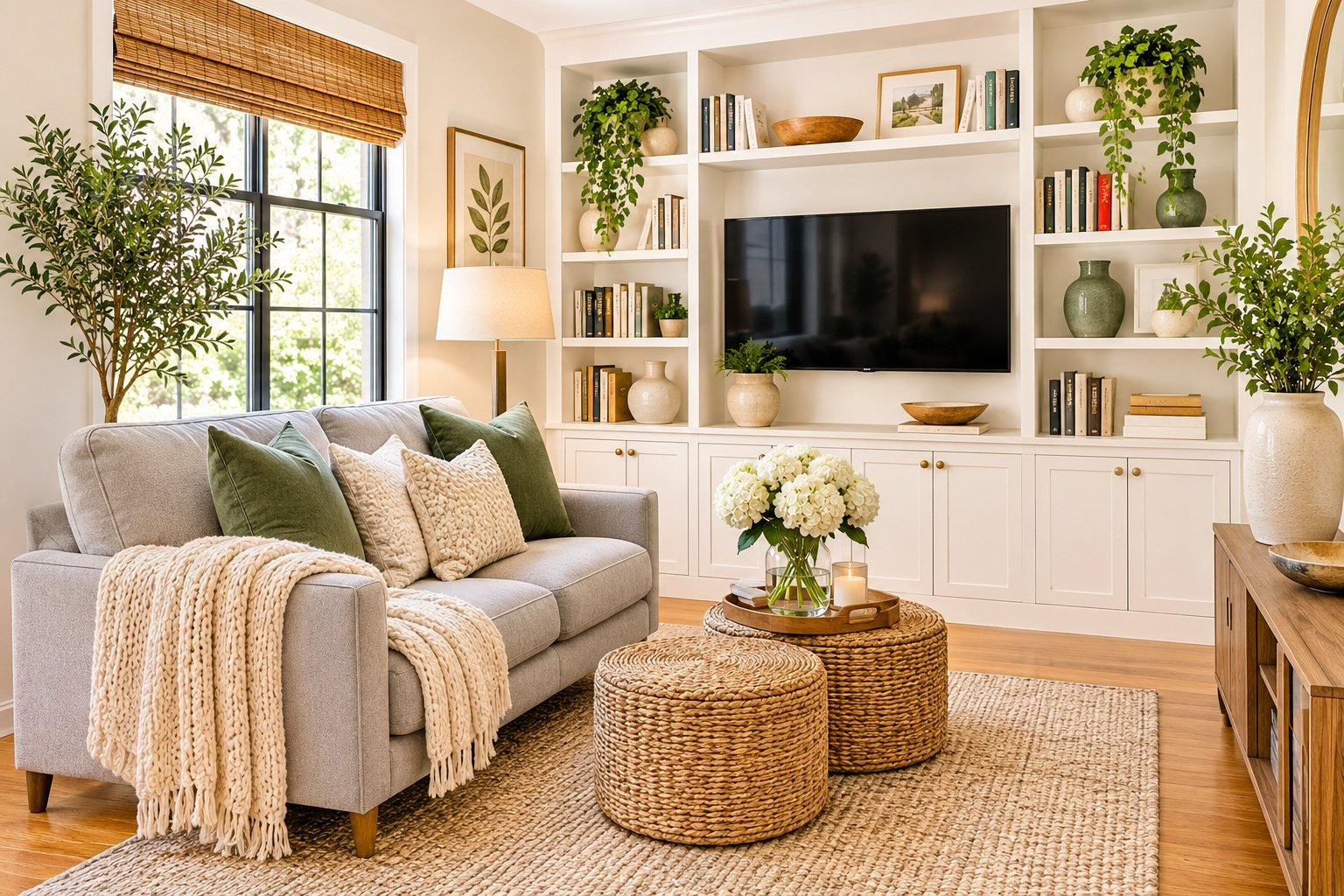
Frame a small wall with affordable floor-to-ceiling bookshelves and leave an open center cavity for your TV. Paint the entire unit the same color as your walls. Painting the shelves to match the wall eliminates visual clutter and draws the eye upward toward the ceiling.
12. The Sliding Barn Door or Slat Panel Cover
Install a simple track above your wall-mounted TV with a lightweight woven cane or wooden slat sliding panel. Slide the panel open when it is time to watch a game, then pull it shut to hide the screen behind warm natural texture.
13. The Frame TV Flush-Mount Setup
If your budget allows, an art-mode television sits completely flush against the wall with a single thin cord running inside the drywall. When idle, it displays museum artwork with a matte finish that looks genuinely like canvas rather than glass.
14. The Bedroom-Style Footboard or Ottoman Bench
In ultra-tight studio layouts, place a pair of plush storage ottomans in front of your sofa instead of a hard coffee table. You get hidden storage for extra blankets, extra seating when friends visit, and a soft footrest that keeps the center of the room easy to walk around.
15. The Projector and Drop-Down Screen Swap
If even a 43-inch screen feels too heavy for your walls, ditch the television altogether. Mount a compact short-throw projector on a high shelf and install a retractable ceiling screen that rolls down right in front of a window or bookshelf. During the day, your room stays 100% open.
Quick Rules to Make Any TV Layout Feel Larger
No matter which floor plan you pick, a few simple styling habits will instantly give your small room extra breathing room:
- Keep furniture legs visible: Sofas and media consoles raised on slender wooden or metal legs let light pass underneath, making the floor look continuous.
- Choose clear or round tables: A round glass or acrylic coffee table removes sharp corners from tight walkways and practically disappears visually.
- Hide every single wire: Dangling black cables create instant visual noise. Use inexpensive paintable cord concealers along the wall so the setup looks clean and intentional.
- Stick to the right viewing distance: A good rule of thumb is multiplying your screen size in inches by 1.5 to find your ideal seating distance in inches. For a 50-inch TV, sitting about 6 feet away feels immersive without overwhelming a small space.
A compact living room does not have to feel cramped just because you love movie nights. Start by clearing bulky furniture out of your main walking path, lift your screen onto the wall, and let natural light do the rest of the heavy lifting. Which of these layout ideas are you planning to try in your living room first?