


If your living room feels chaotic, cramped, or visually heavy, shifting your color scheme can completely reset the atmosphere without forcing you to buy a single piece of new furniture. Interior designers consistently turn to blue for its proven calming properties, making it one of the most versatile, timeless, and forgiving colors you can put on your walls or upholstery.
Whether you are dreaming of a breezy coastal retreat, a crisp modern apartment, or a cozy, moody evening sanctuary, choosing the right blue living room color palettes gives you an effortless foundation to build upon. Because blue spans everything from whisper-soft glacial tints to rich, dramatic navy tones, pairing it with the right woods, metals, and neutral textiles ensures your space feels inviting rather than cold.
Here are 14 carefully curated blue color schemes—complete with designer styling tips—to help you bring calm, airy elegance into your home.
Why Blue Works So Well in Living Rooms
Unlike stark grays that can occasionally look flat or harsh yellow-toned neutrals that shift unpredictably under artificial bulbs, blue adapts gracefully to changing light throughout the day. In the morning, pale and watery blues amplify natural sunlight, making compact living rooms feel noticeably wider and brighter. By evening, deeper shades absorb harsh glare and create a cozy, cocoon-like environment ideal for relaxing after a long day.
The secret to nailing a blue room lies in balancing temperature. Because blue sits on the cool side of the color wheel, pairing it with warm natural materials—such as honey oak, woven rattan, cognac leather, or brushed brass—keeps the space feeling grounded and lived-in.
Soft and Airy Neutral Pairings
If your main goal is maximizing natural light and making a modest floor plan feel open and breathable, start with pale, low-contrast combinations that bounce brightness across every wall.
1. Pale Sky Blue and Crisp White
For a room that feels instantly larger and flooded with fresh morning air, pair soft sky-blue walls with bright white trim, baseboards, and clean linen upholstery. This classic combination mimics an open horizon, blurring the visual boundaries where the walls meet the ceiling. Keep window treatments sheer and white so daylight filters gently into the seating area.
2. Ice Blue and Warm Birch Wood
Ice blue carries a subtle, crystalline coolness that looks effortlessly modern, though it can feel a bit sterile if paired solely with white or silver. Ground the palette by introducing warm birch, ash, or light white-oak furniture. Adding woven seagrass baskets and honey-toned hardwood flooring brings in just enough organic warmth to balance the crispness of the walls.
3. Powder Blue and Soft Alabaster
Powder blue offers a gentle, muted alternative to brighter pastels, carrying a whisper of gray that makes it feel grown-up and refined. Paired with creamy alabaster walls, brushed nickel hardware, and oatmeal-colored knit throws, this palette creates a seamless, soothing transition between an open-concept living room and adjacent hallways.

4. Aqua and Sandy Beige
Bring coastal serenity indoors without resorting to cliché nautical decor by pairing a gentle, watery aqua with sandy beige textures. Anchor the seating area with a chunky jute or sisal rug, hang unbleached linen curtains, and incorporate weathered driftwood or matte white ceramic vases. The warm beige undertones keep the aqua feeling sun-drenched and relaxed year-round.
Sophisticated Coastal and Watery Tones
Mid-tone blues offer slightly more visual depth while maintaining an airy, refreshing mood. These palettes bridge the gap between casual daytime comfort and polished evening entertaining.
5. Seafoam Blue-Green and Crisp Linen
Sitting right on the border between blue and green, seafoam creates a restorative, spa-like environment that immediately lowers your shoulders the moment you walk in. Combine seafoam walls or accent chairs with crisp unbleached linen drapes, matte stoneware pottery, and indoor olive trees for an effortless organic modern aesthetic.
6. Denim Blue and Heather Gray
Casual, familiar, and endlessly livable, medium denim blue acts almost like a neutral in interior design—much like your favorite pair of jeans. Layering a soft denim-blue slipcovered sofa with heather gray armchairs, charcoal wool throw blankets, and subtle concrete accents gives your living room a relaxed, tactile depth that hides everyday wear and tear beautifully.
7. Slate Blue and Brushed Brass
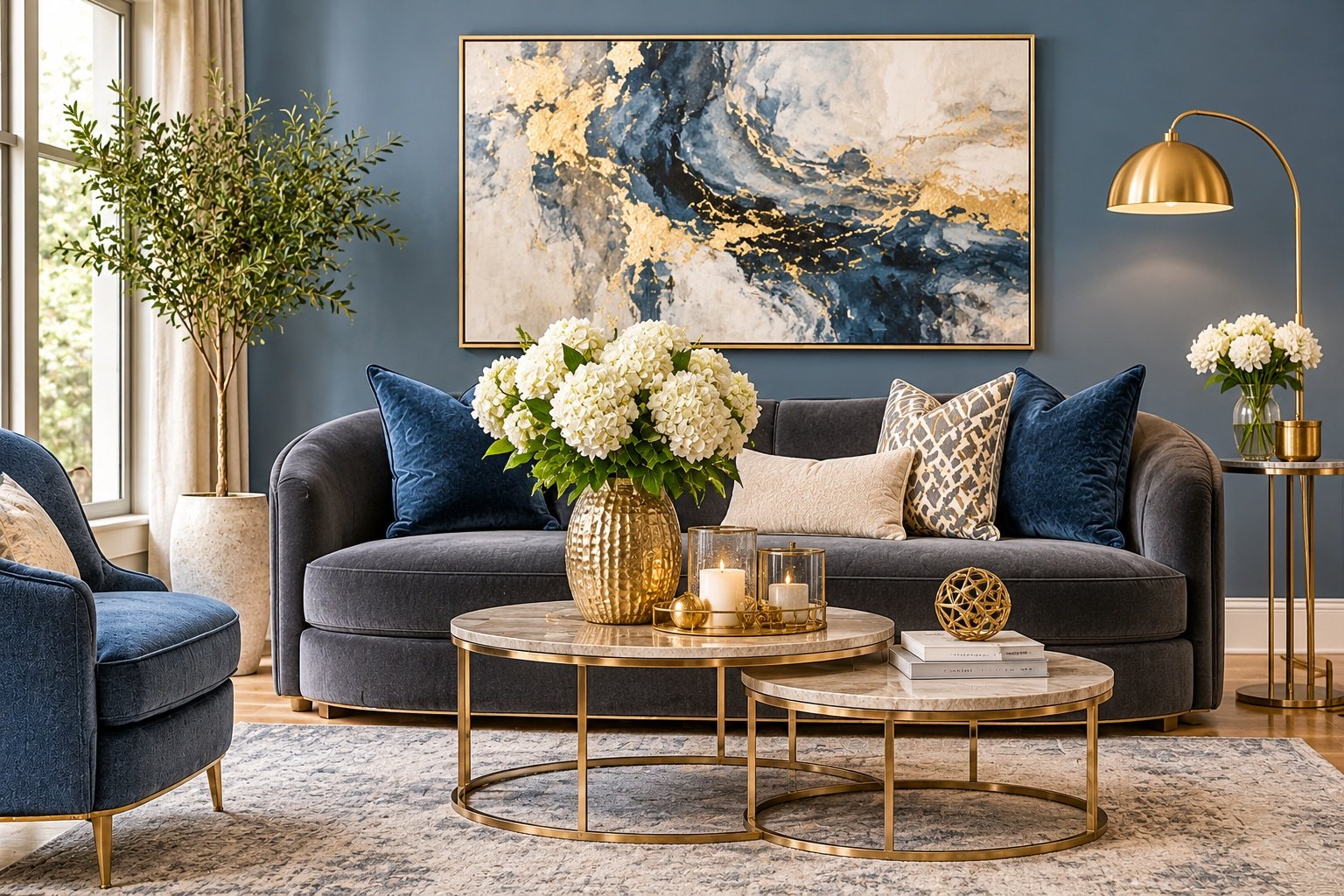
Slate blue features a sophisticated gray-violet undertone that reads remarkably upscale and architectural. Elevate the look by adding warm brushed brass lighting fixtures, sleek metal-framed coffee tables, and plush velvet throw pillows. The metallic warmth cuts right through the cool gray-blue backdrop, giving the room instant boutique-hotel polish.
8. Glacier Blue and Cool Silver
If you prefer a sleek, contemporary aesthetic with clean lines, embrace the crisp energy of icy glacier blue paired with polished chrome or cool silver hardware. Glass tabletops, mirrored trays, and geometric monochrome art prints amplify this palette’s reflective quality, making it an especially smart choice for city apartments with limited natural light.
Moody and Dramatic Deep Blue Schemes
You do not have to stick exclusively to pale shades to create a calm atmosphere. Deep, saturated blues absorb visual clutter and bring an undeniable sense of richness and intimacy to larger or well-lit spaces.
9. Classic Navy and Crisp Ivory
Navy blue is the undisputed heavyweight champion of timeless interiors, bringing instant structure and grounding contrast to any layout. Balance the visual weight of deep navy walls or a large navy sectional by keeping your ceiling, area rug, and window treatments a crisp, bright ivory. Repeating ivory accents in framed artwork and ceramic lamps keeps the room feeling bright and balanced.
10. Midnight Blue and Rich Walnut
For a cozy, intimate evening sanctuary built for movie nights and quiet conversation, wrap your walls in velvety midnight blue and anchor the space with mid-century walnut wood furnishings. Add a saddle or cognac leather armchair and warm amber table lamps—the rich wood grain glows brilliantly against the dark blue backdrop.
11. Teal Blue and Warm Ochre
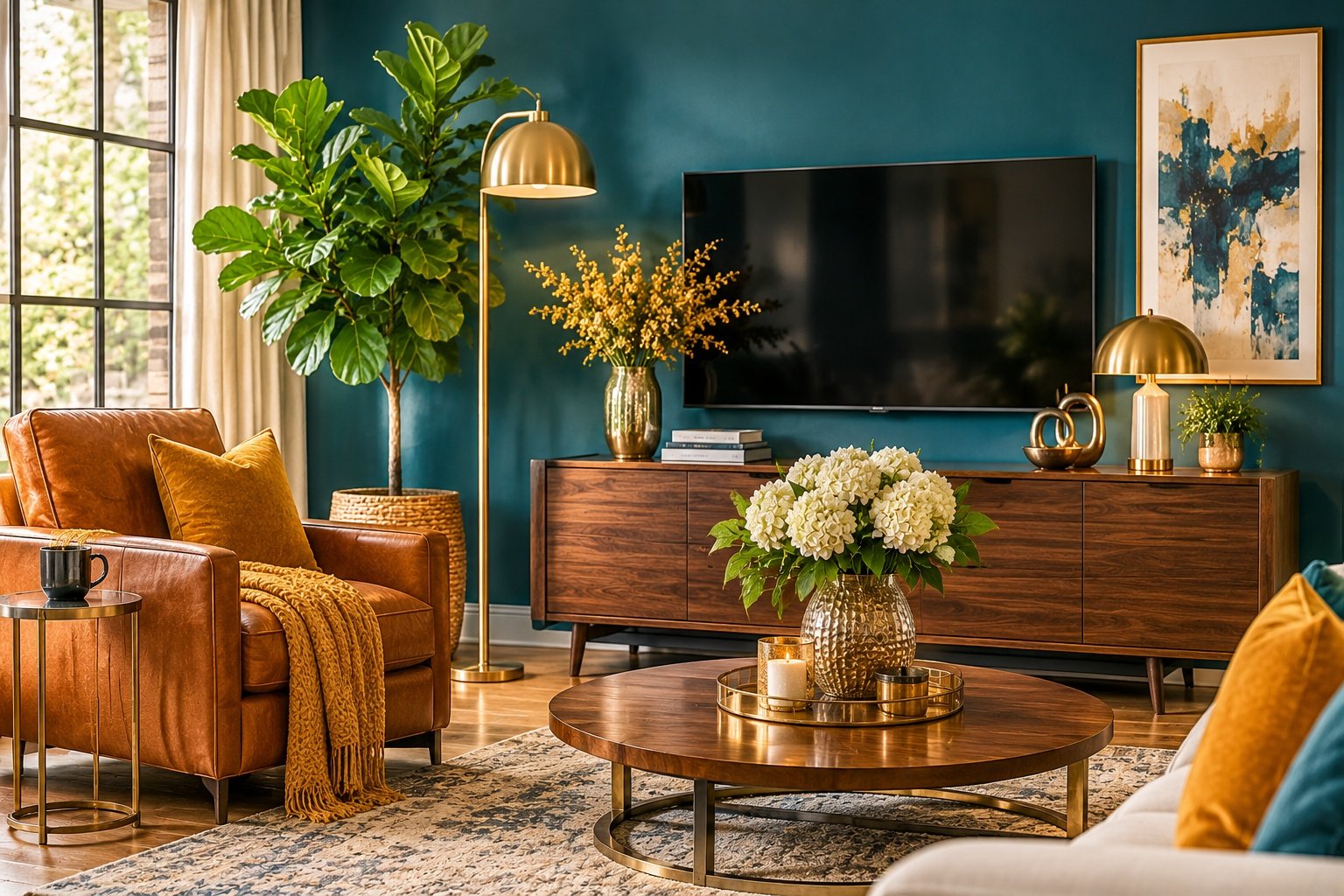
Teal is an energetic, jewel-toned blend of deep blue and green that thrives alongside warm earth tones. Pairing saturated teal walls with warm ochre, mustard yellow, or rust-colored velvet throw pillows creates a striking, complementary color contrast that feels vibrant, artistic, and deeply welcoming.
12. Cobalt Blue and Clean Monochrome
Cobalt is a high-impact statement color that radiates confidence and modern flair. Rather than painting all four walls, introduce cobalt sparingly through a sculptural accent chair, a bold patterned rug, or an oversized abstract canvas set against a clean black-and-white monochrome backdrop. Letting white walls dominate keeps the electric blue feeling fresh rather than overwhelming.
Natural and Earthy Blue Blends
When you want a space that feels collected over time rather than pulled straight from a showroom catalog, blend muted blues with earthy terracotta, clay, and botanical greens.
13. Cornflower Blue and Terracotta
The cheerful, slightly vintage charm of cornflower blue balances effortlessly with the sun-baked warmth of rustic terracotta pots, raw clay ceramics, and rust-colored woven textiles. Because blue and orange sit directly opposite each other on the color wheel, muted versions of both colors create an organic, harmonious energy that feels grounded and welcoming.
14. Periwinkle and Soft Sage Green
Periwinkle introduces a subtle, dreamy hint of violet into classic blue, creating a soft and imaginative palette. Pair muted periwinkle accents or wallpaper with dusty sage green upholstery, natural oak side tables, and plenty of trailing indoor plants so the room stays deeply connected to nature.
Practical Tips for Styling Blue in Your Living Room
Before picking up a paintbrush or ordering fabric swatches, keep a few simple guidelines in mind to ensure your chosen palette looks right in your specific home:
- Test paint samples against your room’s natural light: North-facing living rooms receive cooler, bluish daylight that can make icy shades feel chilly—lean toward warmer blues with hints of green or violet (like seafoam, teal, or periwinkle) in those spaces. South-facing rooms bathed in warm golden sun can handle crisp sky, slate, or ice blues effortlessly.
- Follow the 60-30-10 color rule: Keep 60% of the room grounded in a dominant neutral (such as white walls or an ivory rug), use your chosen shade of blue for 30% of the space (such as the sofa, curtains, or an accent wall), and reserve 10% for warm metallic or earthy accents like brass, walnut, or terracotta.
- Layer plenty of tactile textures: Because blue is visually smooth and cool, contrasting materials make all the difference. Mix bouclé, chunky wool knits, raw linen, weathered wood, and woven rattan so the room feels physically cozy and inviting.
Choosing from these blue living room color palettes is one of the easiest ways to turn a busy household space into a calm, restorative retreat. Start small with new cushion covers and a throw blanket, or commit fully with a fresh coat of paint on your main focal wall. Which of these 14 blue combinations matches your home’s personality best?