

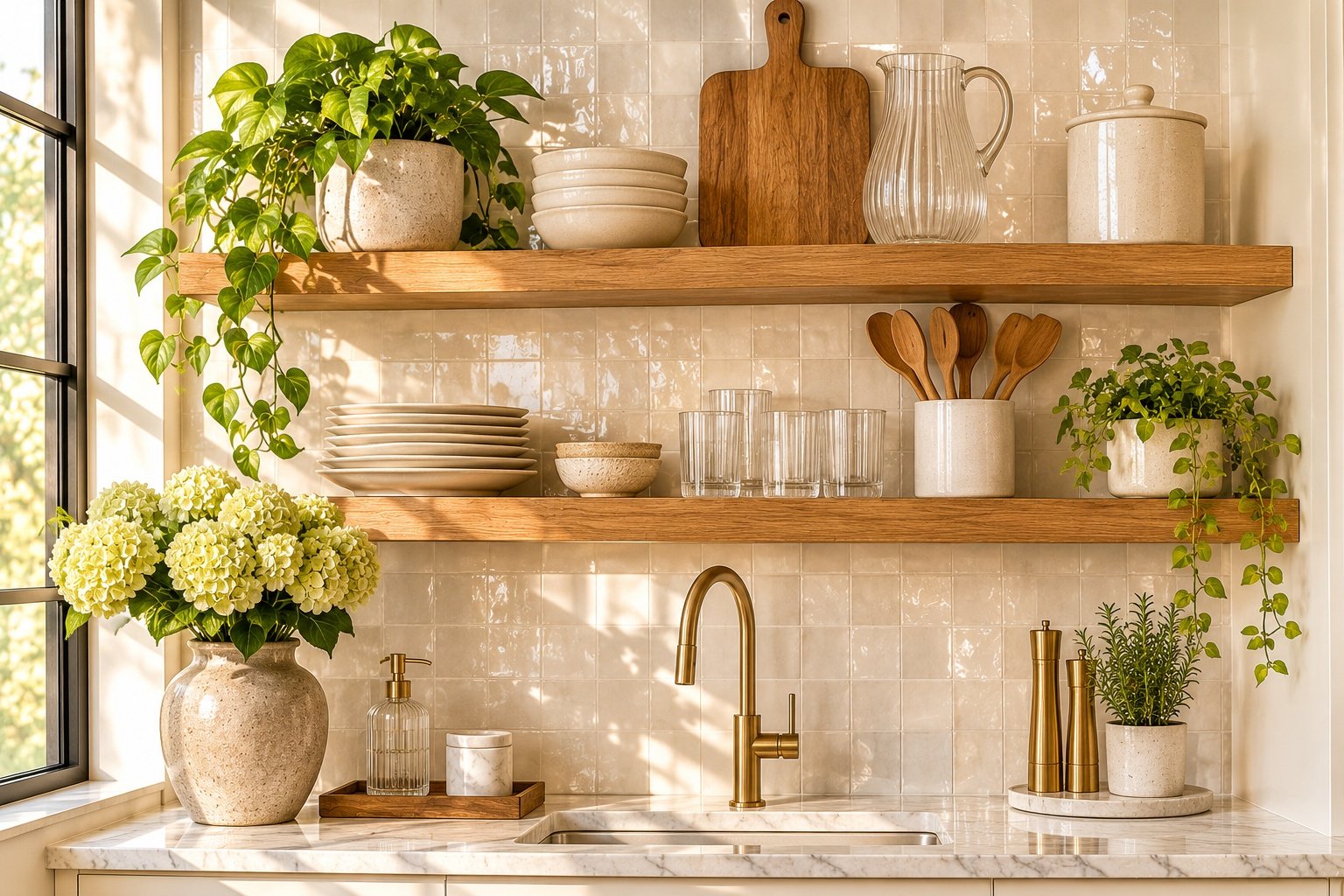
Swapping upper cabinets for open floating shelves can make a kitchen feel instantly wider, brighter, and more inviting—until everyday dishes, mismatched mugs, and spice jars start piling up. Without cabinet doors to hide behind, open shelving quickly tips from effortless editorial charm into visual chaos.
Learning how to style open kitchen shelves comes down to treating your shelves like a curated blend of daily function and sculptural art. By combining everyday ceramics, warm natural woods, and intentional breathing room, you can keep your most-used dishes within arm’s reach while making your kitchen look straight out of an interior design magazine.
Here are 9 foolproof designer rules for how to style open kitchen shelves without clutter.
1. Follow the 70/30 Function-to-Decor Ratio
The biggest mistake homeowners make is filling open shelves exclusively with decorative knick-knacks—or stuffing every inch with utilitarian plastic containers. Aim for 70 percent functional items you actually use every week (plates, bowls, drinking glasses, coffee mugs) and 30 percent decorative accents (potted herbs, framed art, wooden boards, or vintage pitchers).
2. Stick to a Cohesive 3-Color Palette
Because open shelves display dozens of individual objects at once, limiting your color scheme prevents visual overwhelm. Anchor your shelves with crisp white or cream dishware, warm natural wood tones, and clear glass, then repeat just one subtle accent color—such as sage green ceramics, matte black accents, or warm terracotta.
3. Anchor the Bottom Shelf with Heavy Everyday Plates
Visual weight matters just as much as physical weight. Place your heaviest, bulkiest items—like stacks of ceramic dinner plates, salad bowls, and large mixing bowls—on the bottom shelf closest to the countertop. Keeping heavier pieces low grounds the entire wall and makes daily unloading from the dishwasher effortless.
4. Layer Cutting Boards Behind Smaller Items
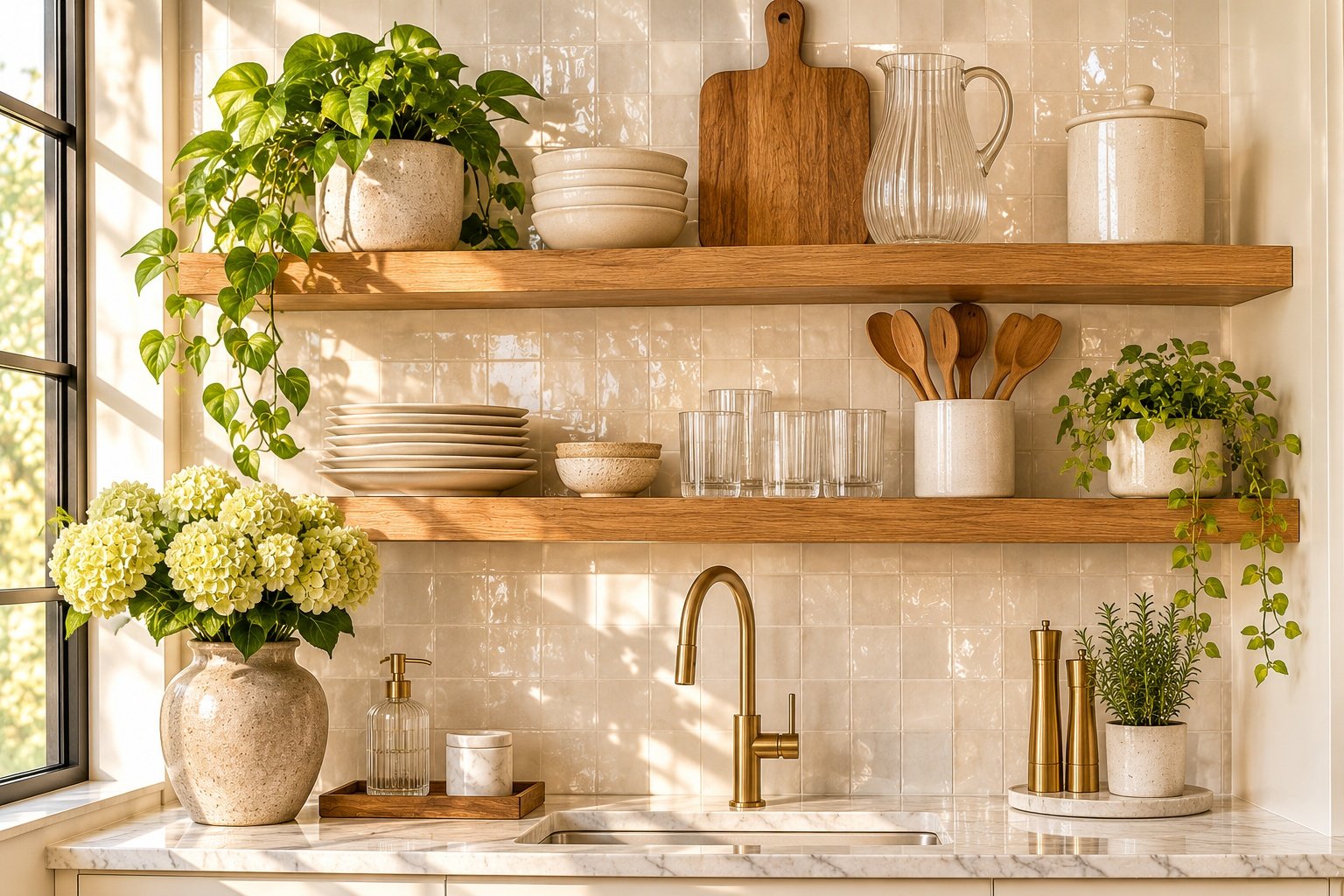
Leaning one or two warm wooden cutting boards against the backsplash instantly adds height, depth, and organic texture. Place a stack of small white bowls or a ceramic salt cellar directly in front of the leaning board to create rich foreground-to-background layering—a signature trick for how to style open kitchen shelves like a pro.
5. Group Items in Odd Numbers (The Rule of Three)
Human eyes naturally find odd-numbered groupings more dynamic and relaxed than rigid symmetrical pairs. Arrange items in clusters of three or five with varying heights: for example, pair a tall glass olive oil bottle, a medium ceramic canister, and a low stack of pinch bowls together on one end of a shelf.
6. Decant Pantry Staples into Matching Jars
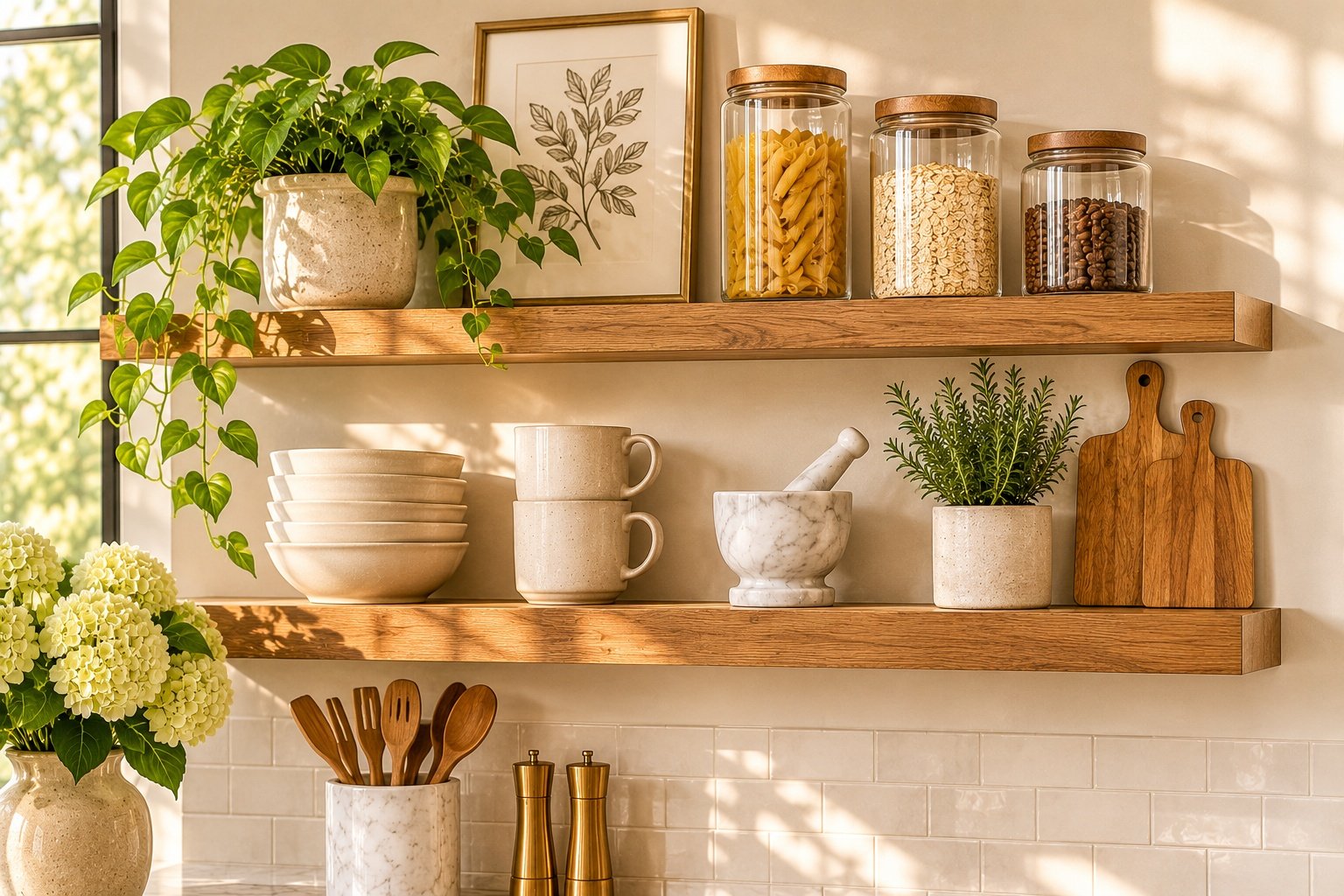
Brightly colored cereal boxes, crinkly pasta bags, and mismatched spice labels create instant visual clutter. Transfer frequently used dry goods—such as oats, rice, coffee beans, and pasta—into uniform clear glass jars with bamboo or ceramic lids so your pantry staples double as clean, cohesive decor.
7. Leave 25% Negative Space on Every Shelf
If your shelves look packed from edge to edge, nothing stands out. Leave at least a quarter of every shelf completely open—especially at the outer ends and between distinct groupings. Negative space lets your eyes rest and makes your favorite ceramics look intentional rather than crowded.
8. Vary Shapes and Textures Across Levels
Avoid lining up items of the exact same height in a straight row across the shelf. Balance sleek, reflective glass tumblers with rough stoneware pitchers, curved woven baskets, and matte wooden bowls. Contrasting textures keep a neutral color palette from ever feeling flat or sterile.
9. Add Living Greenery for Softness and Movement
Sharp architectural lines from rectangular shelves, square tiles, and stacked plates need something organic to soften the look. Tuck a small potted trailing pothos, a vase of fresh eucalyptus stems, or a pot of fresh rosemary onto the top shelf so delicate green leaves spill gently over the wood edge.

Quick Maintenance Habits for Open Kitchen Shelves
- Put everyday dishes on the shelf: Dust only settles on items that sit untouched for months. Storing the plates and glasses you reach for daily means everything gets washed and rotated naturally.
- Keep tall, rarely used appliances in lower cabinets: Store blenders, waffle makers, and bulky plastic containers behind closed doors so your open shelves stay light and airy.
- Wipe shelves once a month: Give your floating shelves a quick microfiber wipe-down during your regular monthly kitchen reset to keep wood grain looking fresh and grease-free.
Mastering how to style open kitchen shelves turns everyday kitchen storage into one of the most charming focal points in your home. Start by clearing your shelves completely, grouping your favorite daily dishes by color, and leaving plenty of breathing room between clusters. Which of these shelf-styling rules will you try in your kitchen first?